Pages

Monday, March 27, 2017

Why I Sympathize with Marie Antoinette AKA a Somewhat Short History of The Young Queen Part 1

Marie Antoinette, that name alone stirs up an endless pit of opinions. The most popular being that she was a ruthless, horrible, extravagant, superficial tyrant. Every class on the French Revolution talks about Marie Antoinette like she's a cardboard box, like she's only a dusty, stuffy old portrait.

I want to shed some light on the ill-fated queen's life from a different angle. I personally do not believe that she was horrible or a tyrant. I will try to be as honest and neutral as I can considering that my opinions on this topic are quite strong.

First of all, Marie Antoinette never said "let them eat cake" and it makes me really sad that this is what defines her today. The term "let them eat cake" existed long before Marie Antoinette was queen. The phrase had been pinned on nobility before Marie Antoinette was rumored to have said the famous phrase.

Another misconception is that Marie Antoinette was responsible for the revolution and France's suffering.
Think about this, can one person really spend so much that they make a country broke? No, that is crazy, ridiculous and unrealistic! France was penniless before Marie Antoinette even arrived.

A really important thing to remember when studying any history, especially the French Revolution is that history is always written by the winners, every single court and courtier in the 18th-century spent extravagantly, some even more than Marie Antoinette.

Essentially, Marie Antoinette was an accessible status symbol, a scapegoat, she was only trying to be a good queen and didn't exactly know how to. She was doing the best that she could.

Marie Antoinette left her family in Austria at the tender age of fourteen to become the queen of France. She was married to a stranger and was taken to a new, foreign land. What awaited her were courtiers and townspeople that would scrutinize everything she did and every move that she made. Marie Antoinette could do nothing right. 

In France's defense, the people adored Marie Antoinette when she first arrived, she a fresh new face, she was a symbol of the future. France was in decline, they were broke and struggling to stay a super power. Marie Antoinette was the future. (Talk about a lot of pressure!)

Before Marie Antoinette even reaches Versailles, the young dauphine had to take part in the handover ceremony at the border between Austria and France. The handover ceremony consisted of Marie Antoinette being stripped naked, her Austrian clothes taken away and dressed in French clothing. In addition, Marie Antoinette had to say goodbye to her attendants and her beloved dog Mops. Marie Antoinette cried at the handover ceremony.

Finally, Marie Antoinette reached her new home and was expected to consummate her marriage. Long story short, this never happened for seven years. The young queen's marriage became the punchline of jokes which was embarrassing as well as worrisome. An unconsummated marriage meant that Louis XVI and Marie Antoinette's claim to the throne was in jeopardy.

One of the biggest underlying issues was what an unconsummated marriage truly meant: if Marie Antoinette couldn't produce an heir, who would be the next king of France when her husband was gone?

Essentially, the marriage was a wreck! Louis XVI was awkward and more concerned with hunting and metalwork than his wife. Meanwhile, the revolution was growing and France was in decline.

To keep this post at a reasonable length, I'm going to put this post into parts, this post obviously being part 1!

I really hope you guys enjoyed reading this post, I absolutely loved writing it since I am obsessed with Marie Antoinette and her life. Feel free to share your own opinions on the queen in the comments, I really would love to hear them!
-Abigal

Books For The Obsessive Historical Costumer

As a historical costumer myself, I know how crazy it can be, getting fabric, researching, sewing and putting your blood, sweat, and tears into making a dress that only sort of meets your standards. But even through it all (and I mean all) you wouldn't give up your hobby for the world. But, there is one thing that makes you feel better on even the most frustrating historical costuming days: books! Paperback, hardcover, big or small, books are one of the best parts of historical costuming and also is one of my favorite parts. Without further ado, here are the books on historical costuming/the history of fashion you need in your life:
Fashion Victims: Dress at the Court of Louis XVI and Marie-Antoinette by Kimberly Chrisman-Campbell
I have personally read this book and give it all the stars! It provides a rich and descriptive history of fashion from the 18th century. With images galore and the most stunning cover, this book could not better if you want to understand and elaborate on your fashion history knowledge. If your an 18th-century girl like myself, you will adore this book.
 Patterns of Fashion by Janet Arnold
I just recently bought books 1 and 2 and although I am super, super only a little confused about how the patterns work, I really do use these books (mostly for trim and not patterns) Although, I know that as my sewing skills expand that making a dress from one of these patterns won't be as confusing and daunting (hopefully soon enough!)
Georgiana: Duchess of Devonshire
Okay, so this might not technically be sewing related but Georgina Cavendish is a very famous fashion icon who also has a fascinating story. I believe that most historical costumers are interested in history (at least I hope so!) and would find this book really entertaining if they have not already read it. I personally have read this book and thoroughly enjoyed it. It is really clear while reading the book that Amanda Foreman spent a lot of time and effort writing this book. 

-Abigal

Tuesday, February 21, 2017

Making of: My (Sort of) First Ever Robe a L'anglaise

Hello, world! Today I will talking about my first ever historical 18th-century dress! (Okay, third. Lets just not talk about the first two.)

I finished the mockup and am using the amazing J.P. Ryan robe a l'anglaise pattern. I only added one sleeve to practice putting on sleeves the 18th century way. (I used this wonderful tutorial to learn how)
I think it fits pretty well and am really proud of myself. I am just waiting for some fabric swatches so that I can decide on the fashion fabric for the dress as well as the lining. I only had to make a few minor alteration to get the mockup to fit.

I got my inspiration from these wonderful resources:


Saturday, February 18, 2017

Stylish Saturdays: Franz Xaver Winterhalter's Paintings

Hello! I am starting a new segment on my blog where I will post something stylish from history every Saturday. This week is Franz Xaver Winterhalter's paintings and his deception of the most gorgeous victorian dresses like the ones below. Stylish Saturday's are not to share information on the history of clothing or artists but just to admire fashion of the past.

So many beautiful dresses, they just take your breath away! 
Comment:
Which dress is your favorite?

Tuesday, February 14, 2017

Top 7 Things To Love About Sofia Coppola's Marie Antoinette

 I am going to tell you the top seven things I love about Sofia Coppola's Marie Antoinette movie because this movie is my everything!

In no particular order, here I go!

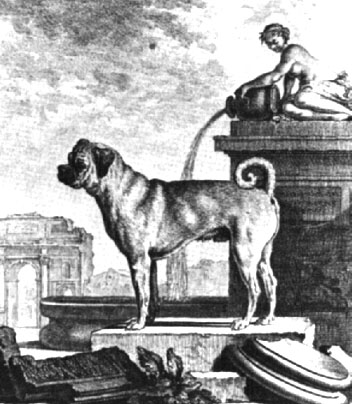
1) Mops the dog (who was actually a real life dog) I mean, just look, he is too cute!

And below is the real Mops:
2) The costumes! They are historically accurate and full of bright silks and printed cottons. 

3) The soundtrack is amazing and although some people hate it (why?) it makes the movie real. This wasn't "just history" back then.
4) Marie's relationship with Louis, so accurate
5) The handover ceremony, I have no words, it was so perfect!
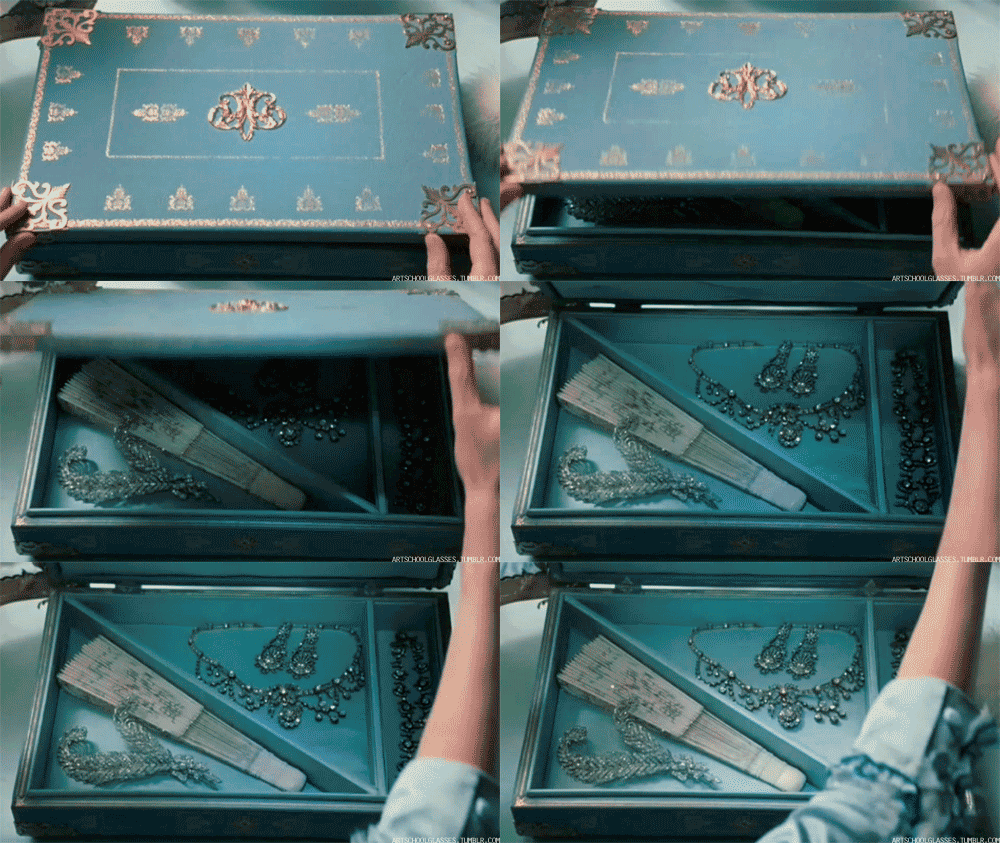
6) The fans, necklaces, and silks
7) How they really filmed in Versailles, the real Versailles!

Happy Valentines Day,
Abigal

Tuesday, February 7, 2017

Big Sleeves of The 1830s

I have a love, hate relationship with clothing in the 1830s. I love the movie “The Young Victoria” If you haven’t see this movie, watch it! Okay, so they may have chucked out some parts of history for stuff that isn’t even true but on the bright side the costumes are gorgeous! The dresses are made of scrumptious silks in soft golds and airy cottons in deep reds and sunshine yellows. The dresses are gorgeous, absouletley gorgeous. 

I mean just look, how can you not fall in love?

The costume designer was Sandy Powell who also designed the costumes for Shakespeare in Love (1998)

                                 And of course, Prince Albert, I love them together so much!


Anyway, onto what this post is actually about:
One thing that was BIG (no pun intended) in the 1830s were large, puffy sleeves.

Just look at these fashion plates and you will see!


And later in the 1830s sleeves became smaller and more elegant:
Women would get the slightly bell shaped silhouette by piling on petticoats until finally they got the beautiful shape above. 
The large, puffy sleeves are called gigot sleeves from the French word “gigot” which means back leg of an animal (because apparently that's what gigot sleeves look like)
One way to get the look was through sleeve plumpers:
From the L.A. County Museum of Art
The late 1820s saw a rise in big puffy sleeves. As romantic, extravagant styles became more popular in the 1830s, the gigot sleeves became a gigantic fashion trend. Some critiques hated the sleeves and nicknamed them ”imbecile sleeves”

Bibliography:
"Gigot Sleeves." The Fashion Historian. N.p., n.d. Web. 07 Feb. 2017.
"Gigot Sleeves." Gigot Sleeves - Fashion, Costume, and Culture: Clothing, Headwear, Body Decorations, and Footwear through the Ages. N.p., n.d. Web. 07 Feb. 2017.

Monday, February 6, 2017

Dream Dresses #1

Hello! Today I will be showing a few fashion plates that I would love to re-create in the upcoming months (if I have time and materials!)


Reddingtons are gorgeous and I love this pink reddington with the big purple hat and hedgehog hairstyle! I need this in my life! Although, I would change a few things, I would wear a white petticoat instead of a blue one and the yellow bit would be pink. Overall, I am obsessed with this dress, especially the zone front like aspect.

 Okay, so this isn't technically a dress but I love historic hats more than anything and plan on re-creating the pink hat on the bottom right corner so I felt like I should include this in my first dream dresses post.
 Look at the gorgeous fuschia silk and cording on the back (I thought that was only a 19th-century thing until I saw this fashion plate) I love, love, love the Turkish inspired sleeves although I don't love the yellow accents and would prefer mine to be white.
 Look at the color of this frock, it's gorgeous and the white accents make this my ultimate dream dress.
I couldn't help but leave the best for last, this beauty has my favorite (Turkish inspired sleeves!) a stunning white sash, an anglaise back, ruffly trim and the most amazing blue color and train. This dress was love at first sight and might be my favorite fashion plate of all time.

Making these dazzlingly 18th-century dresses is going to be quite a feat. I only started working on my first ever 18th-century a few weeks ago and am going to have more updates on it when I get more fabric in the mail. But, a girl can dream!

-Abigal